
How to Keep Abrasive Blasting On Spec Through Humid, Changing Weather
For contractors and facilities along the Gulf Coast, moisture is the biggest threat to a blast that has to stay on spec until it is coated. High humidity keeps the dew point close to steel temperature for much of the year, and winter adds cold fronts, sharp overnight temperature drops, and foggy mornings. Those conditions can cause rust bloom on freshly blasted steel, clog blast equipment with wet abrasive, and push coating application outside the limits on the manufacturer's product data sheet.
Most project specifications and coating TDS documents set firm limits for surface temperature, dew point, and relative humidity. Meeting them in humid, changing weather comes down to four things: knowing the conditions, keeping the abrasive dry, keeping the compressed air dry, and protecting the blasted surface until it is coated.
Know the Conditions Before You Blast
Three readings decide whether final blasting and coating can proceed:
The 5°F margin is not arbitrary. In theory, any surface even slightly warmer than the dew point stays dry. The extra margin covers instrument tolerance and conditions that change during the shift.
When a cold front moves through, surface temperature is the reading most likely to fail. Steel loses heat overnight and can sit several degrees below the air temperature at sunrise. As warm, humid air moves back in after the front, or morning fog sets in, that cold steel collects condensation before anyone sees it.
Take readings with a sling or digital psychrometer and a surface thermometer before final blasting, before coating, and again whenever the weather shifts. Log every reading. On inspected projects, a missing reading can be treated as a nonconformance.
Keep the Abrasive Dry
Abrasive should go into the blast pot dry and free-flowing. Damp media causes problems that show up fast in the field:
- Bridging and clumping in the blast pot
- Inconsistent metering and surging at the nozzle
- Clogged metering valves and blast hose
- Caked material in bags left open to humid air or rain
- Lower production and higher abrasive consumption
Moisture in the media can also carry onto the blasted surface, which works against the cleanliness the job is trying to achieve.
Storage practices that keep abrasive dry from the yard to the pot:
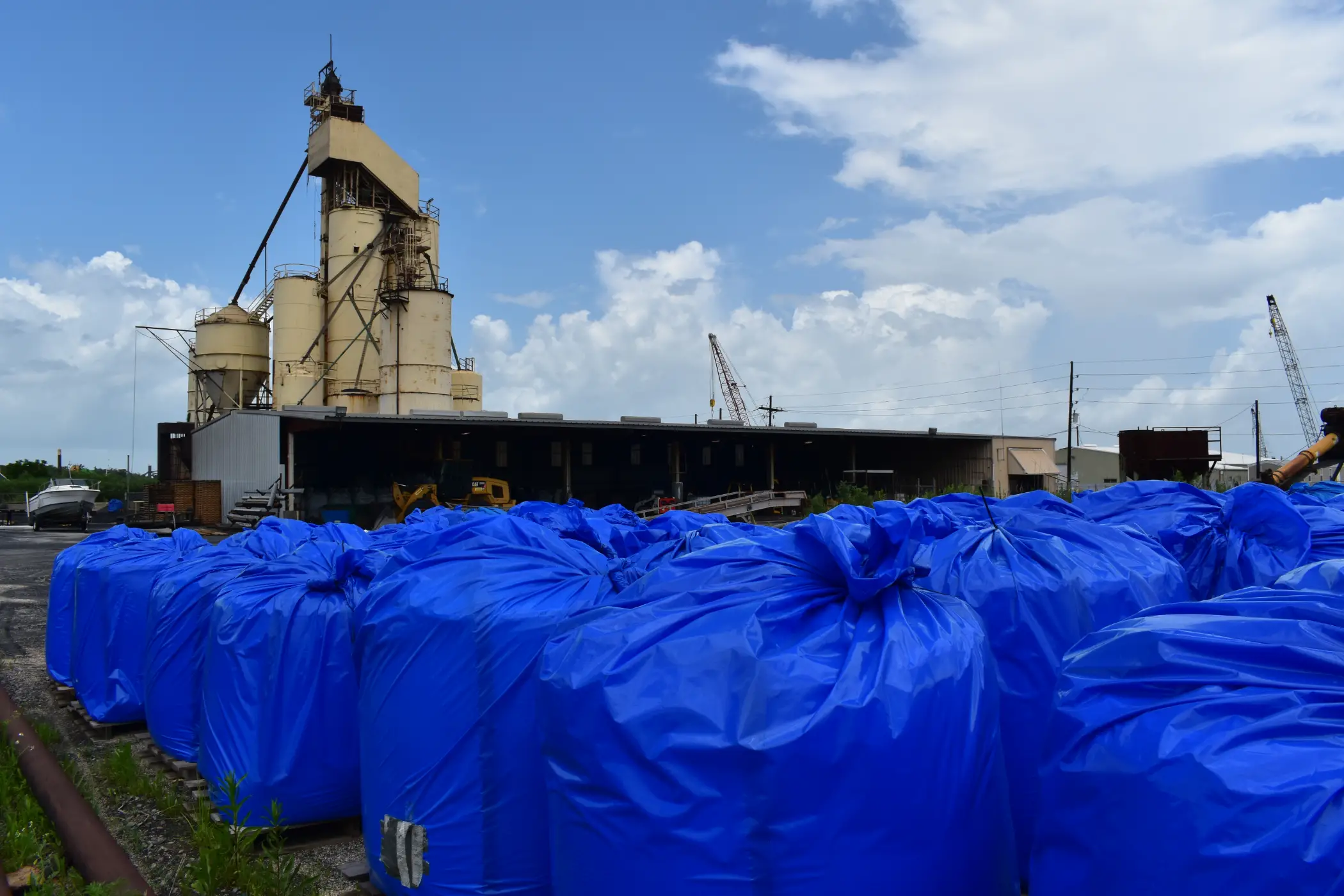
- Store bags and bulk sacks on pallets, off the ground, and under cover
- Keep packaging sealed and shrink wrap intact until the material is used
- Tarp or cover any open bulk material at the end of the shift
- Do not leave abrasive sitting in the blast pot overnight
- Rotate inventory so older material is used first
For contractors and wholesale customers stocking abrasive through the winter, storage conditions matter as much as the product itself. An abrasive that meets SSPC-AB 1 when it ships can still fail in the field if it sits uncovered in the rain.
Keep the Compressed Air Clean & Dry
Dry abrasive doesn’t help if the air stream is wet. Compressors produce hot, moisture-laden air, and in humid conditions that moisture condenses quickly as the air cools in receivers, hoses, and the blast pot. The result is wet abrasive at the nozzle and water or oil carried onto the steel.
To control moisture in the air supply:
- Use an aftercooler and moisture separator between the compressor and the blast pot
- Drain receiver tanks, separators, and traps at least daily, and more often in humid conditions
- Consider a refrigerated or desiccant air dryer for critical work
- Protect hoses and fittings on the occasional night temperatures drop below freezing
Verify air cleanliness with the ASTM D4285 blotter test, which checks for visible oil and water in the compressed air. Many specifications require this test at the start of each shift.
Protect the Blast Until It Is Coated
A surface that meets SSPC-SP 10 at 2 p.m. may not meet it the next morning. If rust bloom appears before coating, the surface no longer meets the specified cleanliness and must be cleaned again, usually by re-blasting. In humid weather, that can mean paying twice for the same square footage.
Ways to protect the work:
- Blast only what you can coat. Size each blast area to what the crew can coat in the same shift while conditions are in spec.
- Watch the end of the day. Surface temperature drops quickly in the late afternoon. Stop blasting early enough to coat before the 5°F margin closes.
- Choose the right heat. Direct-fired heaters release water vapor as they burn fuel, which raises the dew point inside an enclosure. Indirect-fired or electric heat raises temperature without adding moisture.
- Dehumidify when needed. Heating lowers relative humidity, but only dehumidification lowers the dew point. Desiccant dehumidifiers are typically preferred for low-temperature work.
Do Not Overlook Soluble Salts
Chlorides and other soluble salts on steel draw moisture from the air, which speeds up rust bloom and can cause blistering and corrosion under the coating. Refineries, chemical plants, ports, marine structures, and offshore equipment along the coast face salt exposure year-round, and salt-laden air can carry chlorides well inland. Testing for soluble salts before final blasting, using methods described in SSPC-Guide 15, tells you whether the surface needs washing before it is blasted.
Always confirm the coating's minimum application temperature and cure requirements on the TDS. Some coatings are formulated for low-temperature application, but none of them make up for a wet or contaminated surface.
Consider Your Media for Humid-Weather Work
When humidity is high, more work moves inside enclosures with dehumidification, heat, and limited ventilation. In those conditions, media choice affects more than profile:
- Low-dust media improves visibility and reduces the load on dust collection inside a closed space.
- Consistent particle sizing flows more evenly through the metering valve when temperatures and air conditions are changing.
- Recyclable media in a recovery system can reduce the volume of material that has to be stored, kept dry, and hauled away during the season.
The cleanliness, profile, and SSPC-AB 1 requirements on the specification still apply no matter the season.
Pre-Blast Weather Checklist
Before final blasting and coating:
- Surface temperature is at least 5°F above the dew point
- Relative humidity and air temperature are within the coating TDS and project specification
- Abrasive is dry, free-flowing, and stored off the ground under cover
- Air supply passes the ASTM D4285 blotter test
- Soluble salt levels are within the specification
- The blast area matches what the crew can coat in the same shift
- Heating and dehumidification equipment does not add moisture to the enclosure
- All readings are logged